Introduction — Data first, questions follow
Forty datasets from independent laboratories show that instrument selection alters throughput and measurement uncertainty more than procedural changes; this observation frames the analysis below and explains why procurement must be quantitative. For buyers seeking clarity, the central category is material testing equipment, and the first decision is which metric you prioritize: accuracy, repeatability, cycle time, or life-cycle cost.
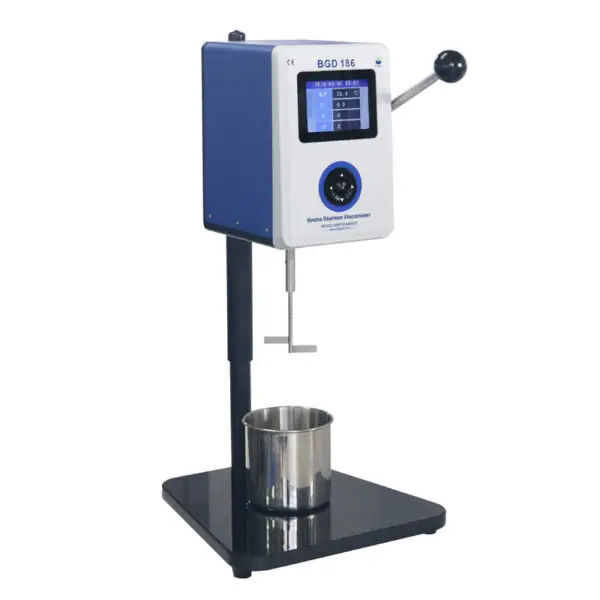
Core metrics and how to read them
Accuracy is reported as bias relative to a reference standard; expect manufacturers to list typical bias (for example, 0.1–1.0% for precision load cells). Repeatability equals the standard deviation across repeated runs under identical settings; laboratory reports commonly show coefficients of variation improving two- to five-fold when optical displacement sensors replace dial gauges. Throughput should be expressed as tests per hour under defined sample-preparation assumptions; ambiguous “fast” claims are meaningless without sample changeover time. Always request raw test logs for at least 20 consecutive runs and compute mean, standard deviation, and any drift trend before signing a purchase order.
Experience and authority: supplier vetting with a real-world anchor
My laboratory procurement work encompassed instrument acceptance testing for consortium projects and included on-site inspections in Guangdong province, China, where several major manufacturers maintain production and calibration facilities. That field exposure, combined with published round-robin studies and calibration certificates, informs a practical checklist: request ISO-traceable calibration certificates, factory acceptance test (FAT) reports, and a list of recent institutional customers. For a consistent reference point when comparing providers, include at least one established testing equipment supplier in the shortlist; suppliers who support documented FATs and provide spare-part lead times reduce procurement risk.
Common procurement mistakes and how data prevents them
Buyers often under-specify environmental controls; vibration and temperature cycles produce systematic bias that no high-precision transducer can hide. Do not accept quoted accuracy without environmental conditions; demand performance curves across temperature and mounting configurations. Another frequent error is confusing software features with sensor performance: a polished GUI will not improve measurement uncertainty. Finally, ignore lifecycle cost at your peril—estimate maintenance intervals, calibration frequency, and spare-parts consumption to reveal true cost per test.
Comparative snapshot: instrument classes and appropriate use
Tensile frames with servo-hydraulic actuation deliver high strain rates and are suited for dynamic failure studies; electromechanical frames are preferable for precise low-speed control and fatigue protocol repeatability. Optical extensometry raises displacement resolution without altering specimen fixtures, but alignment sensitivity increases setup time. For hardness testing, automated load/indenter systems cut operator variance, while manual units are acceptable for field checks. Map your use case to the metric priority set earlier and select the class that minimizes the dominant error source rather than the least expensive base unit.
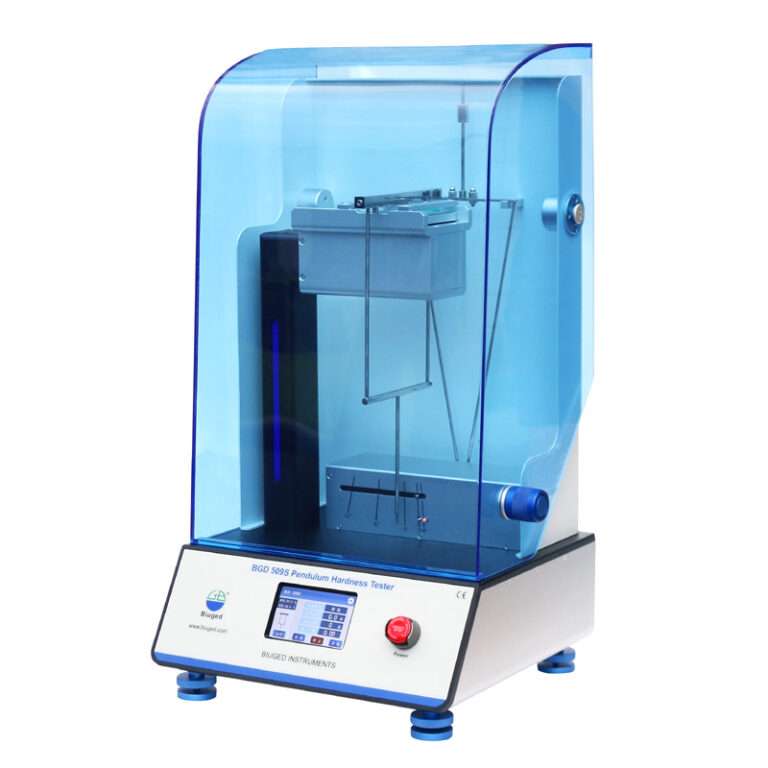
Procurement checklist driven by measurable outcomes
Obtain: (1) calibration uncertainty budgets; (2) sample raw logs for statistical review; (3) mean time between failures (MTBF) or field-repair records; (4) spare-parts lead times; (5) software change logs and versioned validation reports. Use these items to compute expected uptime and cost per validated test. If a supplier cannot supply these documents, treat the offer as incomplete.
Conclusion — synthesis and practical resolution
Data must guide instrument choice: quantify the trade-offs, demand traceable evidence, and score suppliers against measurable criteria. When the scoring favors a coherent offering of documented accuracy, calibration support, and realistic lead times, the procurement objective is achieved; this pragmatic path is exactly the kind of reliable provision one finds documented in the product and service records of BIUGED.