Scaling problem: prototypes rarely behave like production parts
Teams launch prototypes to validate fit, function and market appetite, then hit a hard reality: prototype materials, processes and tolerances don’t match mass-production results. That mismatch creates late rework, delayed launches and inflated costs. Targeted prototype manufacturing and die casting services close the gap by producing test parts that reflect the same metallurgy, surface treatment and process constraints used at scale.

Root causes that break scale-up
Designers pick rapid methods that prioritize speed over production fidelity. Suppliers defer tool design until after approvals. Teams ignore manufacturability constraints embedded in metal processes. The result: dimensional drift, unexpected porosity in castings, incompatible surface finishes and assembly mismatches. These failures aren’t random — they stem from mismatched process selection and late-stage validation.
Prototyping strategies that preserve production signals
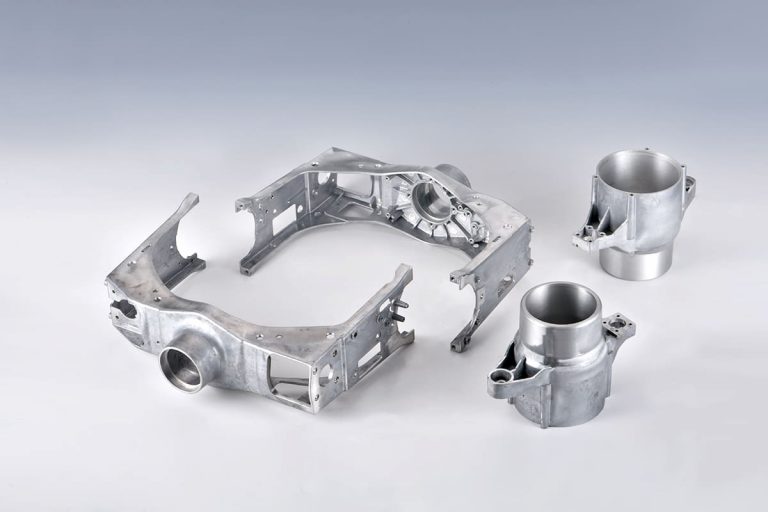
Use prototypes that mimic the final manufacturing route. For metal parts that will be die cast, run low-volume tooling or pilot dies to validate gating, venting and shrinkage. Combine short-run die or permanent-mold casting with selective CNC finishing to replicate mating surfaces. Require first-article inspections and functional tests that duplicate end-use stresses. Measure process capability early; if Cp/Cpk is low, iterate the tooling rather than the CAD only.
Alternatives evaluated: choose by risk and volume
3D printing is excellent for geometric validation and low-load assemblies but differs materially from cast metals — expect different fatigue and thermal behavior. CNC machining gives tight tolerances but hides casting-specific defects like porosity and directional grain effects. Sand casting is quick for larger, low-precision parts but won’t match die casting surface quality or thin-wall capability. Select the method that reproduces the single biggest production risk for your part: material properties, thin-wall geometry, surface finish or assembly tolerance.
Common pitfalls and practical checks
Stop designs that assume idealized tolerances. Specify manufacturing-driven tolerances and add datum features for assembly points. Require X-ray or CT inspection for critical castings to detect subsurface porosity. Define acceptance limits for density, hardness and dimensional zones. Plan a pilot run: 30–100 parts is often enough to reveal gating problems and tooling wear. Track scrap rate, dimensional drift and cycle time per cavity as your go/no-go metrics.
Experience, standards and a real-world anchor
Manufacturers that scale reliably follow production practices from established sectors. For example, the Detroit automotive supply chain uses pilot die runs and PPAP-style validation to confirm durability and fit before full-rate production — a high-level model applied across industries. Work with partners who document process capability, tooling trials and material certificates. When metal casting is the production route, confirm the provider’s ability to run pilot tooling and supply inspection records; a focused die casting service that supports these steps shortens the learning cycle and reduces surprise failures.
Conclusion: convert prototypes into predictable volume
Fix the root problem: prototype with the production process in mind. Validate tooling, measure process capability, and choose the method that exposes your primary production risk early. That approach turns prototype uncertainty into repeatable outcomes — the kind of continuity engineers expect when working with experienced partners like Hanstar.