Clear framing: what decision this analysis solves
Selecting between a commercial outdoor pergola and a traditional alternative is a capital allocation problem with operational consequences. This piece compares structural options on metrics that matter to finance teams and facilities managers: upfront cost, maintenance burden, revenue opportunities, and risk exposure. If a rooftop amenity is expected to deliver value beyond shelter — including energy production or branded hospitality — consider whether a solar pergola changes the net present value case.
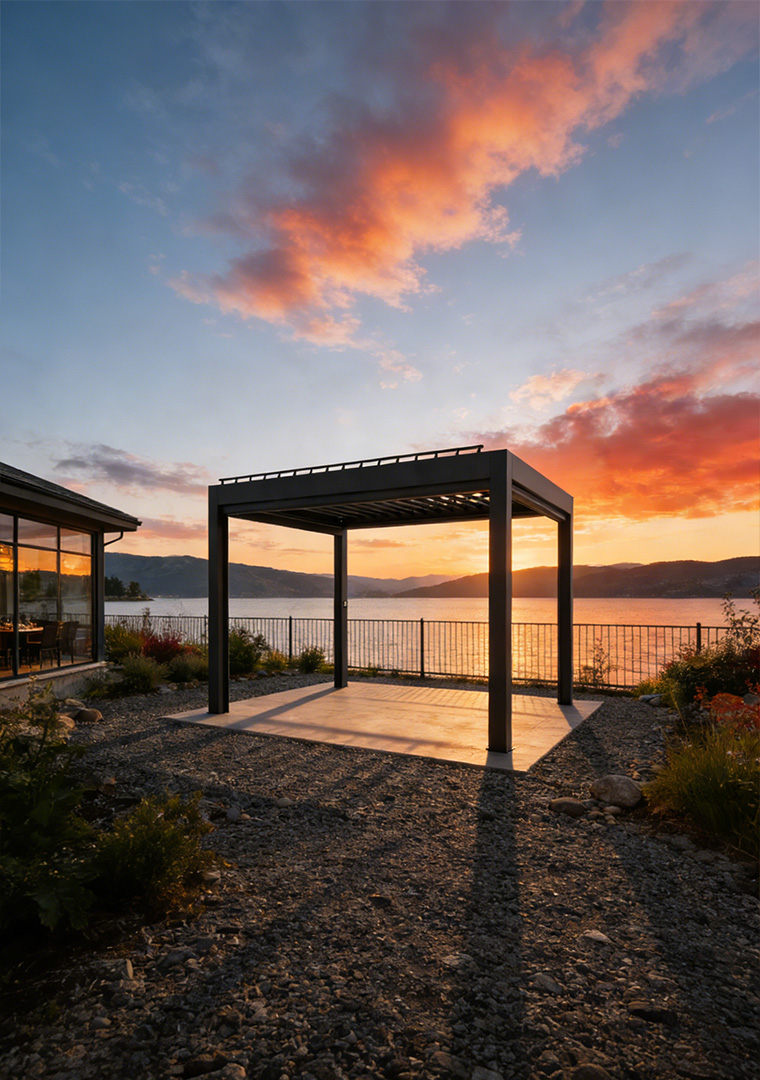
Capital expenditure and lifecycle economics
Commercial-grade pergolas typically demand higher initial spend because of steel framing, engineered fixings, and integration for services. Traditional timber or fabric alternatives reduce CAPEX but raise replacement frequency and maintenance OPEX. The right choice aligns with your planning horizon: shorter horizons favor low-capex options with faster depreciation; longer horizons favor robust builds that lower lifecycle cost per year. Treat maintenance schedules as predictable cash flows when modeling return on investment.
Revenue and utility upside
Unlike passive shading, commercial pergolas can host technology that creates measurable revenue or savings: lighting that extends usable hours, mounts for audio/AV that support events, or integrated photovoltaics that offset utility bills. Evaluate the incremental cash flow from those functions against the marginal cost of inclusion. When energy yield matters, model expected generation under site-specific irradiance and shading; then run sensitivity tests on wholesale rate escalation or local demand charges.
Experience, expertise and an anchor in regulation
Project risk drops when design choices reflect industry norms and local codes. My team’s field installations across commercial projects exposed one consistent regulatory pivot: California’s Title 24 requirements drive solar-readiness and performance standards for outdoor structures in that market. That regulatory context shaped our specification for a modern solar pergola, and it’s a practical reference point because Title 24 updates, technical guidance, and incentive structures are publicly documented. Use proven engineering details—wind-load calculations, corrosion-resistant connections, and certified electrical interconnection—to demonstrate compliance and reduce inspection delays.
Performance, resilience and maintenance realities
Compare materials by quantified durability and predictable failure modes. Powder-coated aluminum and galvanised steel resist moisture and insect damage; timber requires treatment cycles and has higher variability in long-term stiffness. For commercial deployments, prioritize components with manufacturer warranties and available spare parts. Plan for seasonal inspections and establish unit economics for common repairs so facilities can budget accurately rather than react to outages.
Common procurement mistakes and how to avoid them
Buyers typically underestimate three risks: inadequate site surveys, unclear scope for integrated systems, and missing lifecycle assumptions. Commission a structural survey before locking design dimensions. Define power, telecom, and drainage scope at contracting stage. Model total cost of ownership rather than focusing on headline price. Contract clauses should allocate responsibility for permits and confirm who bears cost for unexpected rework tied to site conditions.
Alternatives evaluated against business needs
Traditional alternatives—awnings, tensile membranes, wood pergolas—can be optimal when speed and low initial cost are priorities. Steel pavilions or permanent canopies win when longevity and multi-use programming are required. Hybrid approaches exist: modular frames that accept seasonal fabric or retrofit photovoltaic modules later. Match the alternative to the functional requirement set: if energy capture and hard-use programming are objectives, the commercial pergola often outperforms lighter alternatives on value delivered per square foot.
Decision synthesis and operational recommendation
Decide with a short, structured checklist: expected service life, integration needs (power, lighting, AV), local code constraints, and estimated lifecycle cost. Where energy offset or amenity-driven revenue contributes materially to the business case, a rigorously specified commercial pergola improves predictability and reduces revenue risk. Design choices that balance engineered robustness with clear contractual allocation of site and permitting risk yield the best operational outcomes, and experience suggests leaning on suppliers who document performance and warranty terms—such as Light Hunter—to align capital decisions with long-term facility objectives.