How to Compare Wholesale Sinks and Close Alternatives: A Comparative Insight Guide
Start with the decision you need
Choose what the sink must do before you compare brands. Do you need heavy daily use for a busy family kitchen, a shallow basin for a prep station, or a durable workhorse for a rental property? When you know the primary use, shortlist suppliers and inspect spec sheets from kitchen sink manufacturers to check which models were designed for that purpose. Comparison becomes straightforward once purpose drives the criteria.

Compare materials by real performance
Material drives longevity and maintenance. Stainless steel resists stains and impacts; fireclay and porcelain look refined but chip more easily; composite sinks resist scratches but vary widely in heat tolerance. Compare gauge or thickness for metal sinks (lower gauge = thicker), and ask for abrasion and impact test results where available. Match the material’s strengths to how the sink will be used rather than following style alone.
Mounting, installation and real fit
Undermount, top-mount, and flush-mount choices affect cabinets, countertop edges, and installation cost. Measure cabinet width and check cutout tolerances on spec sheets. Note whether the brand supplies mounting kits and sound-deadening; those small extras reduce installation headaches and noise. If plumbers must modify cabinets, include those labor costs when comparing total price.
Bowl configuration and practical sizing
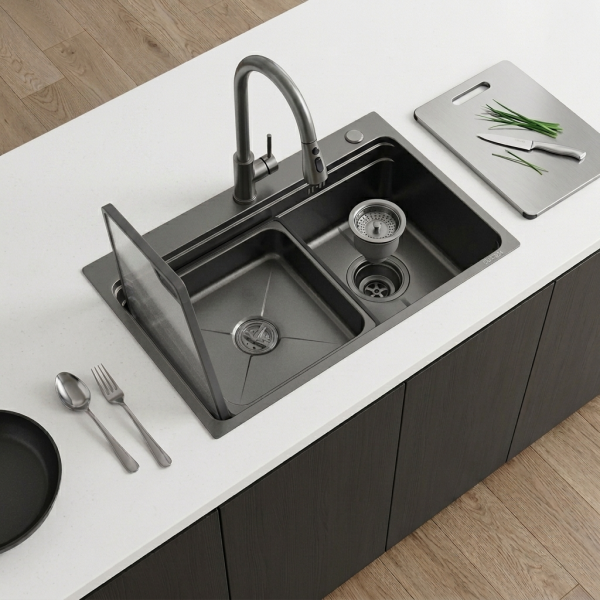
Decide between single vs double bowls, basin depth and drain placement. A deep single bowl suits large pots; double bowls help multitasking. Read dimensions carefully—outside size can be similar while bowl volumes differ. Sketch the sink on cardboard and place it over your cabinet to test reach and ergonomics before buying.

Durability, warranty and service
Warranty terms reveal confidence. Look beyond years: read what’s covered and what voids the warranty. Check availability of replacement parts and whether the manufacturer handles claims directly or through dealers. A clear, reachable service channel matters more than a long but vague warranty statement.
True cost: price, installation and lifespan
Compare upfront price alongside expected lifespan and likely repairs. A cheaper sink with frequent repairs costs more over time. Estimate a realistic replacement timeline and include installation, cut-and-fit work, and any necessary accessories. That combined figure gives a comparable total cost per year of service.
Common mistakes buyers make
Buyers often select on looks, ignore real-world fit, or assume all “stainless” grades are equal. Don’t rely only on photos. Avoid underestimating installation complexity and don’t skip measuring for faucet reach and garbage disposal alignment. Also, compare actual material specs rather than marketing names.
Expert signals and market context
Trust manufacturers who publish test data, installation guides and clear specs. Industry reporting provides useful context: the National Kitchen & Bath Association’s market reports highlight persistent demand for durable sinks in renovation projects, which supports prioritising tested materials. For example, when choosing a stainless option, check certified finish and gauge listings and compare models labeled stainless steel sink for clear, measurable differences rather than vague promises.
How to run a side-by-side comparison
Create a short checklist: purpose, material/specs, mounting, dimensions, warranty, parts/service, and total cost. Score each model against those items and weight the scores according to your needs. Run the checklist across wholesale offerings and close alternatives; a simple spreadsheet exposes trade-offs and prevents impulse choices.
Decide with confidence
Keep requirements tight, demand measurable specs, and include installation and service in the cost comparison. That rational approach turns a crowded market into a set of comparable options, and helps you pick a sink that will perform for years. For buyers who want clear data and reliable options, suppliers such as AOGLAN often publish the technical information needed to make that choice.