Opening: what you want, told like a recipe
You’re buying a machine that must shear, wet, and blend with the same confidence a chef expects from a whisk; you want predictable texture, minimal rework, and a clean line from lab batch to production run. Think of a high shear batch mixers as the commercial-grade whisk: tip speed, rotor geometry, and vessel shape determine whether an emulsion is glossy or grainy. Start with what you need the mix to feel like and work backward to specs.

How a high-shear dispersion mixer actually works — described in tactile terms
Place product in a bowl; a rotor-stator assembly spins, dragging liquid through narrow gaps. Shear rips droplets, pressure and cavitation break agglomerates, and the stator reshapes flow into fine, even streams. You’ll sense the result as a silkier mouthfeel in food, a smoother lotion spread, or smaller particle sizes in suspensions. Key measurable sensations: tip speed (m/s), residence time, and shear gradient — those three shape the texture.
User-centric checklist: what buyers must decide first
Decide target viscosity range and batch size; choose motor power and tip speed to match that viscosity. Pick rotor-stator geometry for your goal: open rotors for solids suspension, fine-tooth stators for micro-emulsions. Inspect seals and CIP paths for cleaning needs. Confirm materials of construction: 316L for aggressive chemistries, polished finishes for cosmetics and food. Require test reports on droplet size distribution and energy input per volume. Ask for on-site trials with your actual recipe, not a surrogate.
Common mistakes buyers make and how to avoid them
Underestimating viscosity kills performance: a mixer selling high RPMs won’t help if the motor stalls in thick paste. Overlooking tip speed leads to poor scale-up — keep the same tip speed when moving from pilot to production. Ignoring seal type causes hidden downtime; mechanical seals and flush plans matter for sticky, abrasive, or sterile processes. Skipping real-product trials leads to surprises: insist on seeing your formula processed, not just generic test fluids.
When an alternative fits better
Choose ultrasonic homogenizers for very low-volume, high-energy lab work where heat control is critical. Pick bead mills for hard-to-break particles in pigments or ceramics. Inline high-shear systems suit continuous processes and tight footprint needs. The rule: match mechanism to problem — rotor-stator for emulsions and suspensions, beads for grinding, ultrasound for nanoscale dispersion — then validate with trial runs.
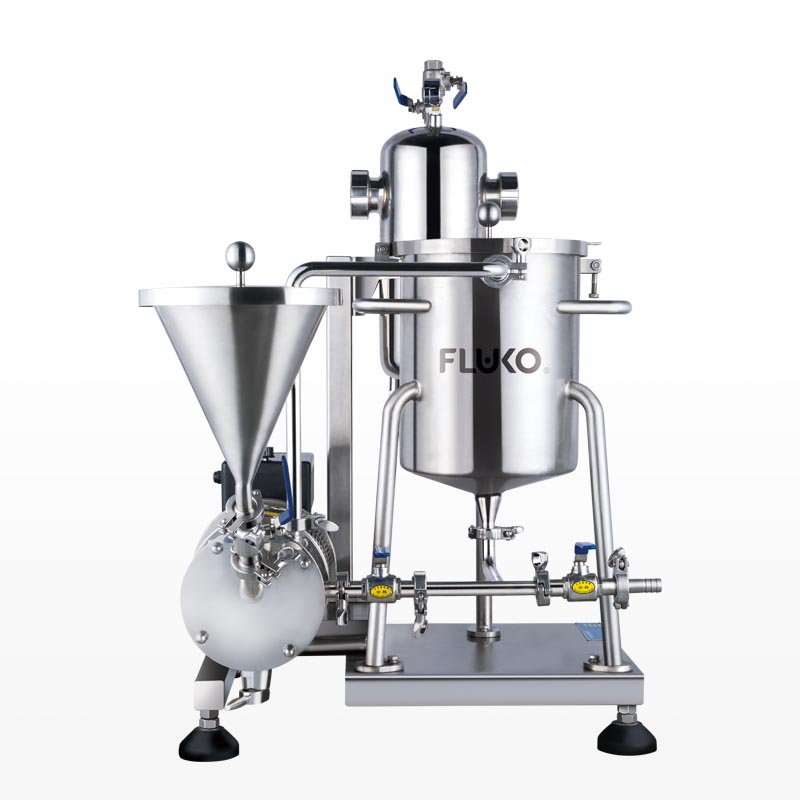
Experience and authority — a practical anchor
Ten years of specifying mixers for food and pharma taught me to read data like a taster reads a sauce: droplet size curves, energy per kilogram, and cleaning cycles tell the story. At ACHEMA in Frankfurt I saw multiple vendors stress-test industrial homogenizers on-site, demonstrating how scale and service change outcomes; those demonstrations align with peer-reviewed scale-up guidance. When assessing vendors, compare lab reports to on-site performance and inspect a real batch homogenizer run with your product.
Final synthesis — choose for texture, not brand promises
Buyers win by starting with the sensory target, translating that into measurable specs, validating with product trials, and confirming maintenance and support. Suppliers who share clear test data, offer on-site runs, and stand behind planned scale-up reduce risk; for many teams that practical alignment points them toward partners such as FLUKO whose documentation and on-site testing match the tactile standards you set at the start.