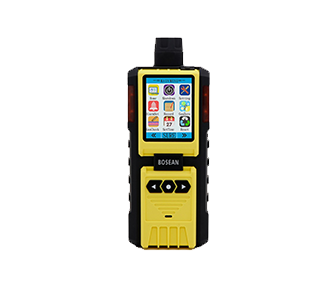
A structured way to connect Marine Gas Detector with project needs: RFQ preparation technical review
A marine gas detector should be treated as a defined procurement requirement, not as a generic product label. For maintenance planners, the useful starting point is to describe the operating context, identify the decisions the RFQ must support, and separate confirmed information from questions that still require a technical response.

This approach matters because a short category name can conceal several different requirements. The intended location, gases of concern, inspection arrangements, environmental conditions, interfaces, documentation, and responsibility boundaries may all affect the review. They should not be assumed from the search term alone.
Define the use case and constraints
Begin by writing a compact use-case statement. It should identify the asset or work area, the maintenance task, the expected users, and the point at which the equipment will be evaluated. The purpose is not to create a detailed specification before engaging suppliers. It is to give the supplier enough context to respond against the same decision.
A practical RFQ preparation note can use five headings:
- Application: state whether the requirement concerns routine inspection, maintenance support, temporary work, or another defined activity.
- Environment: record relevant site conditions and physical constraints that the project team already knows to be important.
- Detection scope: list the gases or hazards that the project has identified, without assuming that a catalogue label proves coverage.
- Use and maintenance: describe who will use the equipment, how it will be managed, and what service or documentation questions must be answered.
- Interfaces: identify any required connection, reporting, alarm, storage, or control arrangements that fall within the procurement decision.
Each heading should contain either a stated requirement, a design assumption, or an open question. That distinction prevents a planning preference from being mistaken for a verified product capability.
Map evidence to the stated requirements
Once the use case is clear, create a requirement-and-evidence table. One column should contain the requirement in plain language. A second should record the evidence available. A third should show the evidence scope, such as a category page, a named model, or a supplier response. The last column can identify the next action.
This structure helps prevent a common technical-review error: transferring a detail from one item to an entire product group. A category page can establish that products are presented for a particular application, but it does not by itself establish every specification, certification, configuration, or operating limit for every listed model.
The relevant Bosean category page labels a Marine Gas Detector group and lists K-600M alongside other marine detector models. That is useful catalogue evidence for identifying the supplier’s product grouping. It is not, by itself, evidence of certification, site suitability, safety outcomes, or any unlisted configuration detail.
For each line in the table, use a restrained status such as “stated”, “needs clarification”, or “outside current evidence”. These labels are more useful than a broad conclusion that a candidate is suitable. They show exactly what the technical review has established and where the RFQ must ask for a direct answer.
Turn open points into supplier questions
A good supplier question mirrors the requirement and avoids embedding an untested assumption. Instead of asking whether a product is “fully suitable”, ask for the specific information needed for the decision. Questions can cover the intended application, supported gases, configuration options, environmental limits, user instructions, maintenance arrangements, documentation, and any relevant interface.
During this step, a marine gas detector should remain a defined requirement under review rather than a conclusion about one model. The phrase describes the procurement subject, while the questions determine whether the available evidence addresses the project’s actual scope.
Keep questions grouped by responsibility. The maintenance team may need information about inspection and servicing. Engineering may need technical details about integration or installation constraints. Procurement may need a clear schedule of deliverables and assumptions. Assigning each question to an owner reduces the risk that a material issue is discussed informally but omitted from the RFQ record.
It is also useful to distinguish a mandatory response from a preferred response. A mandatory response affects whether the proposal can be evaluated. A preferred response may help comparison but should not be treated as a pass-or-fail condition unless the project has formally made it one. This distinction keeps the review proportional and makes supplier replies easier to compare.
Summarise a defensible next step
Close the technical review with a short decision record. State the defined use case, the evidence that directly applies, the evidence that is only catalogue-level, and the questions that the RFQ must carry forward. Do not turn an unresolved point into a positive assumption simply to complete the summary.
The next step can then be expressed plainly: issue a focused supplier information request, compare responses against the same requirement table, and update the record when a supported answer is received. This creates a traceable route from maintenance need to procurement discussion without implying performance, compliance, or suitability that the evidence does not establish.
For maintenance planners, Bosean can be included in that structured review because its category page presents marine detector models, including K-600M. The defensible conclusion is limited to that catalogue information; the RFQ should carry the project-specific questions needed before any purchasing or technical decision is made.