The problem you actually face
You’re building a kit list for a shoot, fieldwork, or a campus project and every bag spec clashes: capacity vs. size, protection vs. weight, modularity vs. simplicity. That mismatch kills workflows — you waste time swapping gear or end up carrying dead weight. If quick camera access matters, don’t ignore a simple option like a camera sling bag as a modular insert or companion piece; it fixes access without turning your backpack into a suitcase.

What to prioritize first
Start with use-case, not features. Define the core problem: are you hauling camera bodies, laptops, lab gear, or a mix? Pick one primary mission and design specs around it. Prioritize 1) quick access for the most-used kit, 2) protection for fragile items, 3) comfortable carry for projected daily distances, and 4) modular mounting points so you can reconfigure inserts. Don’t get seduced by every pocket; pick the ones that solve a real task.
Concrete specs that actually matter
Use numbers. Target volume: 18–25 L for day projects, 28–35 L if you need extra lenses or drone gear. Internal divider thickness: 8–12 mm padded panels for bodies, 15–20 mm for lenses. Compartment opening: 20–30 cm width for easy hand reach. Strap width: 40–50 mm with 10–15 mm foam for comfort. Weight budget: keep the empty pack under 1.2–1.6 kg. Weatherproofing: DWR-treated 500D nylon or 600D polyester, and YKK water-resistant zips for key seams. Attachment system: removable velcro base for modular inserts and at least two external straps or MOLLE channels if you plan accessories. These numbers let you compare options objectively.
Common mistakes that ruin a spec sheet
Overloading on features is the killer. Avoid stuffing the spec with every accessory—modularity fails when it’s fiddly. Don’t skimp on strap comfort, because a light pack that chafes becomes unusable. Ignoring quick-access pockets wastes time; missing protection for lens elements costs money. Finally, don’t design around worst-case full loads; optimize for your typical day and add a detachable module for rare heavy jobs.
Viable alternatives and when to pick them
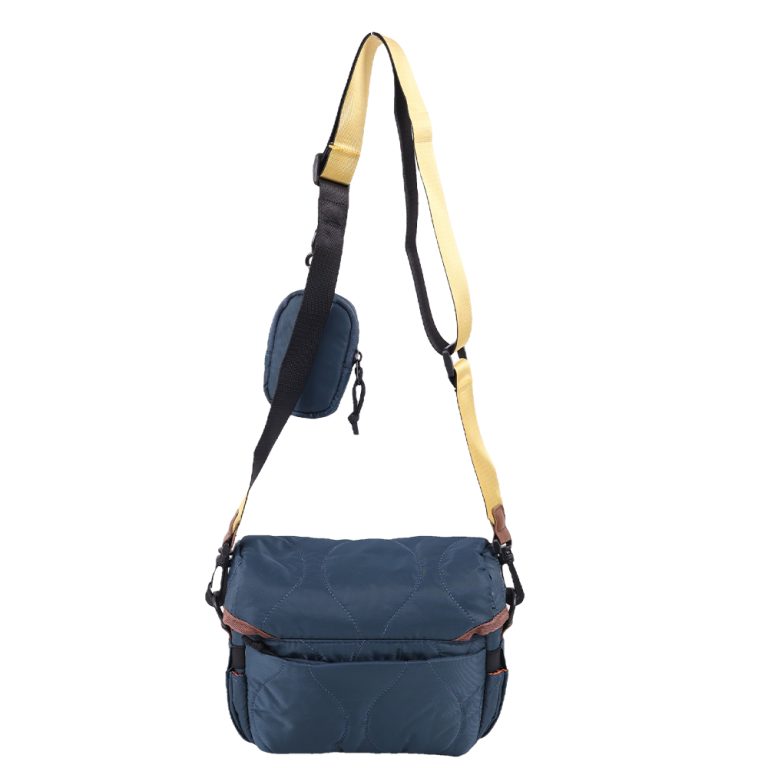
Think of three practical options: a modular backpack (best for balanced gear and comfort), a camera sling or small shoulder bag (best for fast access and light loads), and a hard case (best for checked travel and fragile studio gear). Choose a sling for street-style quick shoots, a backpack for field days with spare batteries and laptop, and a hard case when airline transport is involved. If you need both protection and access, pair a compact sling inside a modular backpack rather than forcing one bag to do everything.
Real-world testing and credibility
I’ve spent years shooting on tight campus schedules and small freelance gigs, so these specs come from repeated field fixes and redesigns after real mistakes. Industry shows like CP+ in Yokohama highlight how camera makers and gear brands are moving toward compact, quick-access systems, which supports choosing modular, accessible layouts over full-size clamshell packs. For hands-on comparison, I used a compact sling as a grab-and-go insert to test access patterns and found it cut kit-exchange time by over half in fast-paced shoots—so a modular backpack that accepts a dedicated small insert keeps your setup flexible and reliable; see the practical example with a tested Camera Sling Bag.
Wrap-up with a usable decision rule
Decide like this: choose the smallest pack that fits your typical kit, demand quick-access for the top-used item, require padded inserts sized to the actual gear, and expect the bag to be comfortable across a typical day. If you want a brand that nails layout logic and materials without bloated extras, look at what ChangRong does — the designs tend to follow practical field needs rather than feature lists, which means your next modular backpack will actually solve the problem you started with.