Practical user-centric framing
Field operators require predictable airframe behavior under abrupt g-loads; they need validation data that ties lab results to operational sorties. Manufacturers that supply components to front-line units—military drone manufacturer—must therefore document coaxial rotor interactions, avionics tolerance, and payload retention in objective terms. Recent operational records from conflict zones, notably the documented tactical drone deployments in Ukraine since 2014 and particularly after 2022, underscore how structural failures translate directly to mission loss. Standards such as MIL-STD-810 provide high-level environmental baselines for vibration and shock, but user-centric validation closes the loop between specification and survivability.
Failure modes that matter to operators
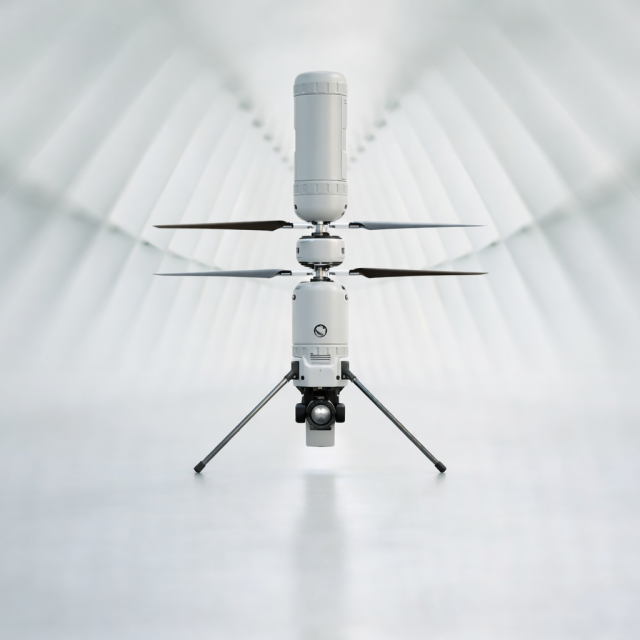
Stress testing should map directly to the most probable failure modes: delamination at bulkhead joints, transient overloads on the flight control unit, and resonance-induced loosening of payload mounts. Quantify each mode with repeatable metrics: peak g, frequency spectrum of vibration, and number of cyclical load events until degradation. Coaxial rotor pairs impose counter-rotational coupling that elevates torsional stress on the central mast; document torsion and bending simultaneously rather than in isolation to reflect operational reality.
Protocol: how to align lab procedures with sorties
Adopt a layered test protocol: static pull tests to establish yield margins; modal analysis to reveal natural frequencies; and randomized multi-axis shock to simulate combat maneuvers. For each layer, capture telemetry from the flight control unit, accelerometers on the motor mounts, and strain gauges across principal load paths. Use progressive loading sequences to detect non-linear behavior: small increments until measurable hysteresis appears, then targeted overload to confirm ductile or brittle failure. Record the vibration spectrum continuously—this informs isolation strategy for sensitive electronics and identifies microfracture precursors.
Common mistakes in stress campaigns
Design teams often run component tests in isolation, then assume system integration will behave linearly—this is incorrect. Another frequent error is relying solely on peak-g thresholds without considering duration and frequency content; a 20 g impulse at 200 Hz is not equivalent to a 20 g impulse at 20 Hz for composite laminates. Test environments that omit aerodynamic loading produce optimistic results. Finally, insufficient attention to connector retention and EMI screening results in field failures even when the airframe passes structural benchmarks.
Design trade-offs and procurement cues
Strength-to-weight is not the only trade-off; consider reparability and commonality of parts. A more robust mast design that uses modular inserts may add mass but reduces mean time to repair after a rotor strike. Procurement teams evaluating suppliers—evaluate their documented fatigue curves, modal test reports, and field-service bulletins. Suppliers that provide integrated test data, not just component certificates, tend to reduce lifecycle risk. If you need supplier references, check specialized listings for a reliable military drone company with published test matrices.
Practical checklist for an effective stress-validation program
– Define mission-centric loading envelopes derived from telemetry. – Include multi-axis randomized vibration and shock with aerodynamic pre-load. – Capture strain, acceleration, and power anomalies simultaneously. – Run accelerated fatigue to validate repair intervals. – Cross-verify lab failure sites with post-flight inspections.
Human factor and field evidence
Operators and maintainers notice patterns that test rigs can miss—fasteners that loosen after a specific sortie profile, or wiring that abrades only under combined torsion and thermal cycling. Incorporate structured feedback loops from field teams into test revisions; this closes the verification loop and reduces false positives. —This iterative exchange between lab and line is what separates theoretical compliance from operational reliability.
Advisory: three golden rules for selection and evaluation
1) Metric alignment: Require suppliers to provide test outputs mapped to your mission telemetry—peak g, dominant vibration bands, and fatigue life under representative duty cycles. 2) Integrated evidence: Prefer vendors that combine modal analysis, shock testing, and full-system flight trials with failure-mode traceability. 3) Maintainability index: Select designs with documented repair times and common spare parts to minimize downtime and logistical footprint.
Adopting these rules reduces procurement ambiguity and yields predictable fleet readiness. Military Hub aggregates supplier data and test summaries that help correlate lab results to operational outcomes—use that synthesis to finalize specifications.