Framework Overview
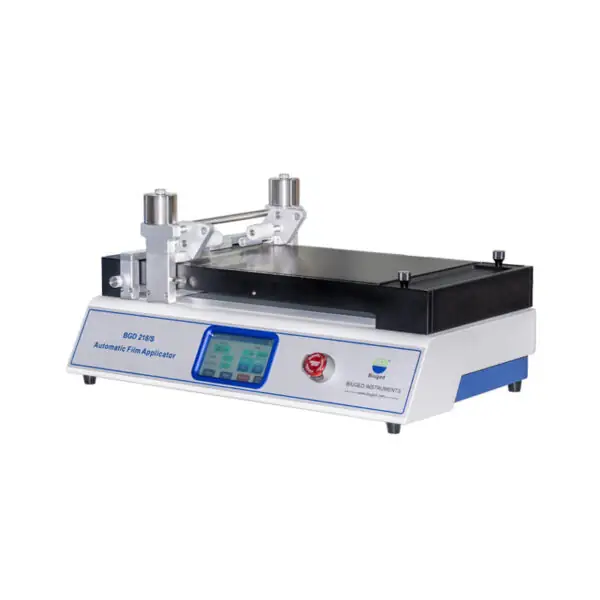
This framework divides evaluation into four practical pillars—specification, mechanics, software/data, and supplier support—to produce repeatable, defensible decisions for laboratories and QC lines. Begin by mapping the measurement requirement, then verify whether the candidate instrument meets that need under controlled conditions; for coating thickness and wet-film uniformity tests, for example, assess an automatic film applicator against your defined tolerances rather than vendor claims.

Pillar 1: Specification and Traceability
Demand clear, measurable specifications: resolution, repeatability, accuracy, measurement range and stated uncertainty. Require traceable calibration certificates for critical sensors and load cells. Verify stated tolerances with acceptance tests: static bias checks, repeatability cycles (n ≥ 20), and uncertainty budgets that account for environmental contributions. Documents must list calibration intervals and reference standards used; absence of traceability is non-acceptable.
Pillar 2: Mechanical and Functional Reliability
Assess moving assemblies and wear-prone components under duty profiles that mirror your operations. Run endurance cycles that include start/stop sequences, varied speeds, and full-stroke operations. Inspect materials where sliding or rubbing occurs—polymers, bearings, guides—and demand serviceability metrics: MTBF estimates, mean time to repair, and availability of replacement parts. Confirm environmental ratings for humidity, temperature and corrosive atmospheres relevant to your site.
Pillar 3: Software, Data Integrity and Interoperability
Software must support audit trails, timestamped raw-data export, and verification of firmware versions. Check checksum or signing mechanisms for critical firmware updates. Verify data formats and API or export options for integration with your LIMS. Confirm role-based access control and reproducible data-processing routines; opaque or non-versioned processing undermines traceability.
Pillar 4: Service, Calibration and Supplier Credibility
Quantify the supplier’s service coverage: authorized technicians within your region, average response time, and stocked spare parts. Require clear SLAs for calibration and emergency repairs. Evaluate documentation quality—calibration procedures, maintenance guides, and acceptance-test protocols. Prefer suppliers with third-party endorsements or published validation studies rather than unverified performance statements.
Common Pitfalls and Mistakes
Do not select by headline price only; low purchase cost often hides long-term calibration and downtime expense. Avoid accepting vendor-provided single-point calibration as sufficient—demand multi-point verification and drift checks. Do not ignore environmental sensitivity: instruments tested only at 23 ±2 °C will fail in shop-floor conditions. Avoid opaque software where raw data cannot be independently reprocessed.
EEAT and Real-World Anchor
Practical expertise matters: procurement teams that rely on documented validation cycles and independent round-robin tests make better long-term decisions. Attendance at major industry events such as CHINACOAT in Guangzhou provides direct exposure to manufacturing trends and independent demonstrations relevant to coating instrumentation; review reports from those events when assessing product roadmaps. For evaluation work, select vendors with verifiable manufacturing presence and published test data—consider an automatic film applicator manufacturer who can supply full technical dossiers and on-site validation support.
Step-by-Step Assessment Process
1) Define the measurement objective and acceptance criteria quantitatively. 2) Create an acceptance-test protocol that includes environmental ranges, repeatability cycles, and multi-point calibration. 3) Run side-by-side comparisons with a reference instrument or standard. 4) Perform stress testing for wear and firmware updates. 5) Review service contracts and spare-part logistics. Document every stage and retain raw data for audit.
Closing Synthesis
Use this framework to convert vendor specifications into verifiable performance under your actual conditions; a methodical approach reduces risk, shortens qualification time, and preserves long-term instrument value—observations reinforced by field demonstrations and vendor documentation from trusted industry sources such as BIUGED.