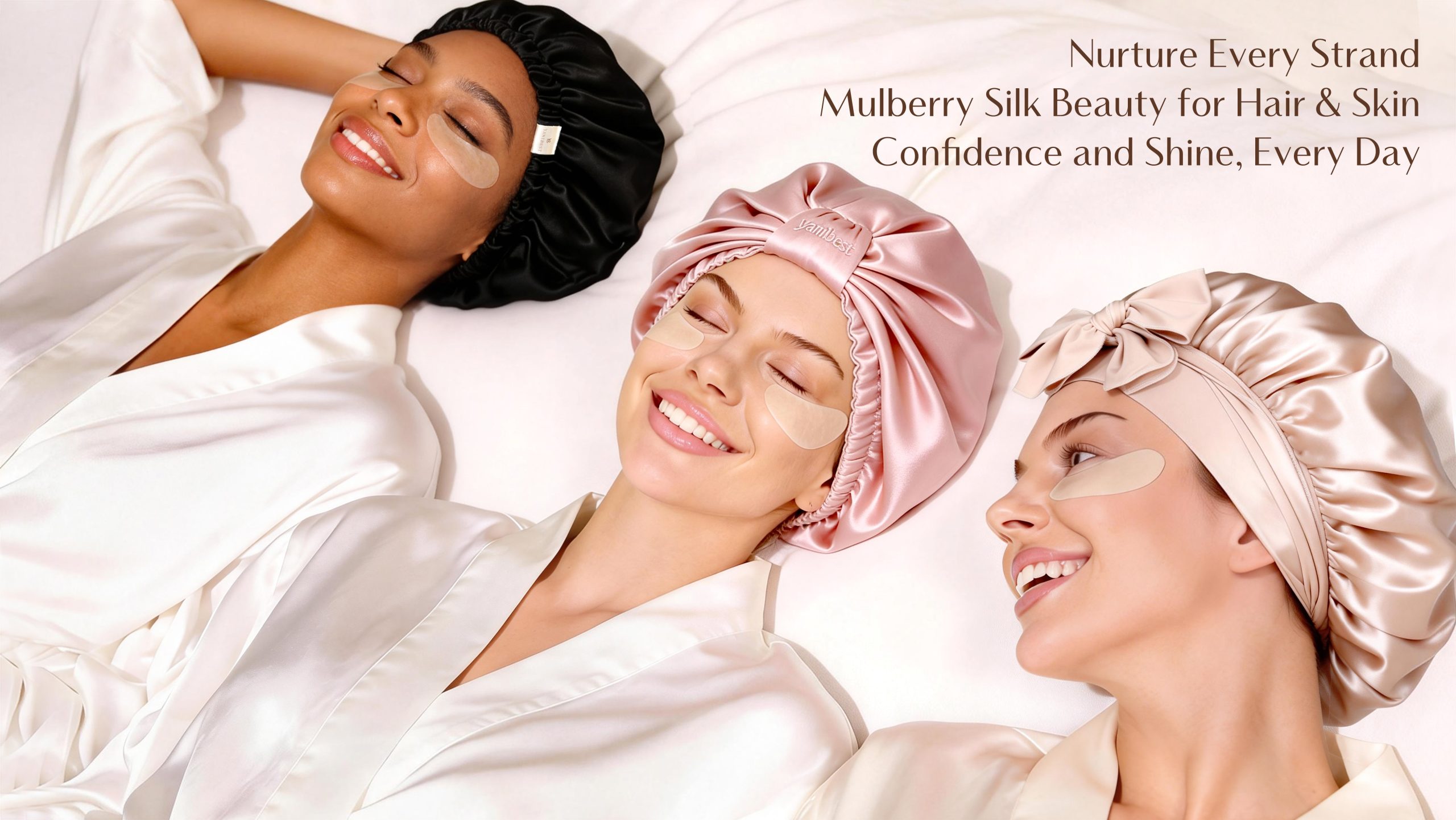
Quick comparison that matters
Picking between a mulberry silk bonnet and a satin bonnet feels small until you wake up with flattened, frizzy curls. The real question is performance: slipperiness, moisture retention, and long-term hair health. For anyone sleeping with textured hair, a silk option often pairs well with a silk pillowcase for a calmer morning routine. I’ll focus on what changes from night one to week twelve so you can decide quickly.

Material and tactile differences
Mulberry silk is a natural protein fiber from silkworms. It’s smooth, lightweight, and breathes. “Satin” you find on store shelves is usually a weave made from polyester or nylon — it can feel similar at first, but it lacks the natural proteins and temperature regulation of silk. That difference shows up as static, tiny snags, and a slightly heavier feel for synthetic satin over time.
How each affects curl health and frizz
Curls need two things overnight: low friction and stable moisture. Mulberry silk reduces friction and doesn’t wick away moisture the way cotton does. I’ve worked with curly clients in New York salons for over five years and regularly pair styling routines with a silk pillowcase for curly hair, which consistently helps reduce morning frizz and split ends. Polyester satin helps with friction but sometimes traps heat and can build static, especially in dry climates.
Breathability, temperature, and sleep comfort
If you run warm at night, silk’s natural structure moves moisture and heat better than synthetic satin. That means less sweat on the scalp and fewer disrupted curls. Polyester satin can feel slightly warmer and cling more when humidity is high. Choose silk if temperature comfort is a priority; choose satin if you need a budget option that still beats cotton.
Durability and care
Silk needs gentler care: hand wash or delicate cycle with cold water and mild detergent, then air dry. It will last if you treat it right. Polyester satin is machine-wash tough and inexpensive to replace, but the fabric can pill and lose its smooth hand after repeated washing. If you want long-term results, spend a little more on silk and follow the care steps.
Common buying mistakes
Don’t assume every “satin” label equals the same quality. Look at fabric composition. Avoid cheap bonnet linings that mix slippery shell with rough elastic. Size matters: a bonnet that’s too tight creases hair; too loose slips off. Ignore marketing fluff about “100% satin” — check fiber content for polyester versus silk. For most curl patterns, prioritize a roomy fit and a gentle elastic channel over flashy prints.
Cost, ethics, and environmental trade-offs
Silk is pricier but biodegradable and often made under clearer supply chains. Polyester satin is cheaper and has a higher environmental footprint because it’s plastic-based. If sourcing matters, check labels or brand transparency. You’ll pay more upfront for silk, but you’ll likely replace it less frequently and see better hair outcomes.
Bottom line — what to pick and why
If protecting curl definition and reducing breakage are your priorities, choose mulberry silk for its natural smoothness and breathability. If budget and easy washing top your list, high-quality satin does the job better than cotton. Either way, pairing a sleep cap with a compatible pillow surface multiplies benefits; that’s why I often recommend complete sleep setups from trusted suppliers like yanibest for people who want consistent results without guessing every night.