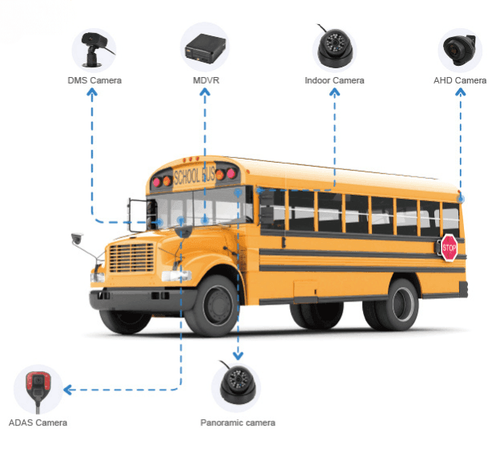
The problem: evidence that fails when tested
Something doesn’t add up. You pull three channels—front, rear, cabin—and the story fractures: mismatched timestamps, lost pre-event footage, GPS that skips at critical seconds. I’ve seen this first-hand while configuring cameras on Los Angeles municipal buses, which taught me how small gaps turn into big doubts. Deploying an AI MDVR often fixes capture and indexing problems, because a robust mobile digital video recorder system can centralize streams and metadata before files fragment. This is a problem-driven piece: name the failure, prove why it matters, then show what to change so reports hold up under scrutiny.
Why three channels complicate accountability
Three independent streams mean three failure modes. Timing slips. Storage fragmentation. Different frame rates. That multiplies the places evidence can break. Watch for these recurring faults:- Unsynced clocks across cameras that confuse event order.- Inconsistent pre-/post-event buffers that lose context.- Missing GPS or speed overlays when a channel fails.- Corrupted file segments during heavy write cycles.Detective instincts help. Start by asking: which single failure would collapse the case? Fix that first.
What to track — the non-negotiables
If you can only guarantee a few data points, make them these. Each one answers a specific cross-examination.- Accurate, timezone-stamped timestamp on every frame or indexed segment.- Camera ID and channel mapping so every clip ties to a physical lens.- GPS coordinates and vehicle speed logged with each event.- Event trigger markers (hard brake, collision alarm, manual marking).- Pre-event buffer length and post-event retention time.- Hash or checksum for exported clips to prove integrity.- System health logs showing recording continuity and storage status.Record these consistently. Missing one of them throws the rest into question.
Reporting rules that survive inspection
Reports must be reconstructable. That means naming, cross-reference, and transparency.- Use a standard filename convention: vehicleID_channel_timestamp_eventID.ext- Always include a timeline table: clip start, clip end, GPS start/end, file checksum.- Attach raw metadata files, not just rendered video.- Note any redactions and how they were performed; preserve originals offline.- Export in widely readable formats (MP4 for video, CSV or JSON for metadata) and include the tools used for export.Common mistakes: trimming clips without retaining originals, failing to log who accessed footage, and exporting with altered timestamps. Those break credibility.
Workflows and checks that stop surprises
Turn chaotic capture into disciplined evidence with simple routines.- Automate clock sync across all cameras on boot and hourly.- Enforce health checks that alert when a channel drops below a threshold.- Maintain rolling backups with immutable copies for at least the retention period required by policy or law.- Train operators to flag incidents immediately and mark footage rather than relying on later searches.- Run periodic audits: compare system health logs to actual clip continuity.These steps reduce last-minute scrambling and preserve the chain of custody.
Common pitfalls and how to avoid them
Teams stumble on repeatable errors. Watch out and fix them fast.- Pitfall: Relying solely on visual evidence without metadata. Fix: Always pair clips with GPS and timestamp logs.- Pitfall: Exporting only rendered video. Fix: Archive raw segments and checksums.- Pitfall: Ad hoc redaction that discards originals. Fix: Keep originals offline and document redaction steps.- Pitfall: Ignoring system health warnings until after an incident. Fix: Automate alerts and require quick triage.
Closing the case
Problems are clues. Tackle the single biggest failure first, then standardize capture, metadata, and reporting so each incident tells the same, verifiable story. My years installing and auditing multi-channel systems taught me to prefer clear records over clever tools; consistent logs beat clever reconstructions. If you want evidence that stands up, build the habits that make it reproducible and honest — the kind of work teams trust when the facts matter, a practical approach mirrored in systems developed by BSJ.