Data-driven opening: framing the question
When engineers evaluate a 20 kWh battery pack for deployment in environments subject to sudden temperature excursions, the assessment must begin with measured performance rather than intuition. Laboratory protocols, field telemetry and system integration govern whether cells survive—and continue to deliver usable energy—after ambient temperature spikes. For system integrators and procurement specialists, an integrated reference such as an all in one energy storage system offers a convenient baseline for comparing chemistry, thermal controls and BMS capabilities against real operational demands. The necessity of this scrutiny was underscored by the February 2021 Texas power crisis, which exposed how rapid environmental stressors can cascade into grid-scale failures when storage systems lack adequate resilience.
How chemistry and physics reduce thermal vulnerability
At the cell level, thermal resilience arises from three interacting factors: intrinsic chemistry, electrode stability, and heat generation under load. Lithium iron phosphate (LFP) and nickel manganese cobalt (NMC) are examples of chemistries with different thermal characteristics. LFP typically demonstrates a broader thermal window and lower propensity for thermal runaway; NMC may offer higher energy density yet requires more aggressive thermal control. Two practical parameters matter: the C-rate (charge/discharge rate) which determines instantaneous heat generation, and the state of charge (SoC) window within which aging mechanisms accelerate. A disciplined chemistry choice combined with conservative C-rate limits substantially reduces temperature-driven degradation.
Standardized testing and empirical indicators
Data-driven selection relies on repeatable tests: thermal chamber cycling, accelerated aging under elevated temperature, and calorimetric heat-release characterization. Practitioners commonly examine cycle-life curves at multiple temperature setpoints and calendar-life trends after high-temperature storage. Useful metrics include capacity retention as a function of cycles at 45–55 °C and impedance growth after thermal excursions. These empirical indicators permit objective comparison between candidate chemistries and cell form factors, and they guide specification of permissible operating envelopes for an entire energy storage array.
System-level design: enclosure, cooling and BMS integration
Cells alone do not define resilience; the pack and system integration are decisive. Active cooling, passive insulation, phase-change materials and forced ventilation all alter the thermal time constant of a 20 kWh pack. The battery management system (BMS) enforces safe SoC windows, implements dynamic C-rate throttling, and balances cells to prevent localized hotspots. When one evaluates modular products or an all in one power system, attention must be paid to thermal modeling, sensor density, and control algorithms that modulate charge/discharge under rising ambient temperatures. A good BMS will reduce charge acceptance and limit discharge power proactively—this reduces internal heat generation and extends usable life.
What field telemetry teaches us
Field deployments in climates characterized by rapid diurnal swings show patterns not obvious in the laboratory. For instance, short, repeated spikes in ambient temperature produce different ageing signatures than sustained high temperatures; the system’s ability to ride through a spike depends on thermal inertia and control latency. Operators should therefore require time-series telemetry—cell temperatures, module gradients, and BMS trip events—before accepting large installations. Such data reveal whether thermal stratification or sensor placement issues exist and whether the control logic responds within the necessary time horizon.
Common mistakes and their remedies
Practitioners make several recurrent errors: over-reliance on nominal cell temperature ratings, under-specification of ventilation under worst-case scenarios, and treating chemistry selection in isolation from system thermal design. Remedies are straightforward. First, mandate thermal chamber validation that replicates worst-case ambient profiles. Second, define acceptance criteria linked to actual deployment telemetry. Third, pair chemistry choice with enforced SoC and C-rate policies in the BMS to mitigate temperature-driven stress. These steps reduce surprises on the field and shorten time-to-reliable operation.
Advisory—three golden rules for selecting resilient storage
Rule 1: Chemistry suitability and operational envelope. Select cells whose documented performance curves show acceptable capacity retention and impedance growth within the expected ambient extremes; require vendor-supplied thermal-aging data. Rule 2: Holistic thermal management and intelligent supervision. Insist on design elements—enclosure thermal modelling, appropriate cooling or insulation, sensor redundancy—and a BMS that implements dynamic power limits and cell balancing. Rule 3: Proven field performance and integration readiness. Verify systems against real deployments or long-term pilot data; demand telemetry access and clear maintenance procedures to handle heat-related degradation.
These rules form the evaluative backbone for procurement and engineering teams seeking reliable 20 kWh deployments.
—
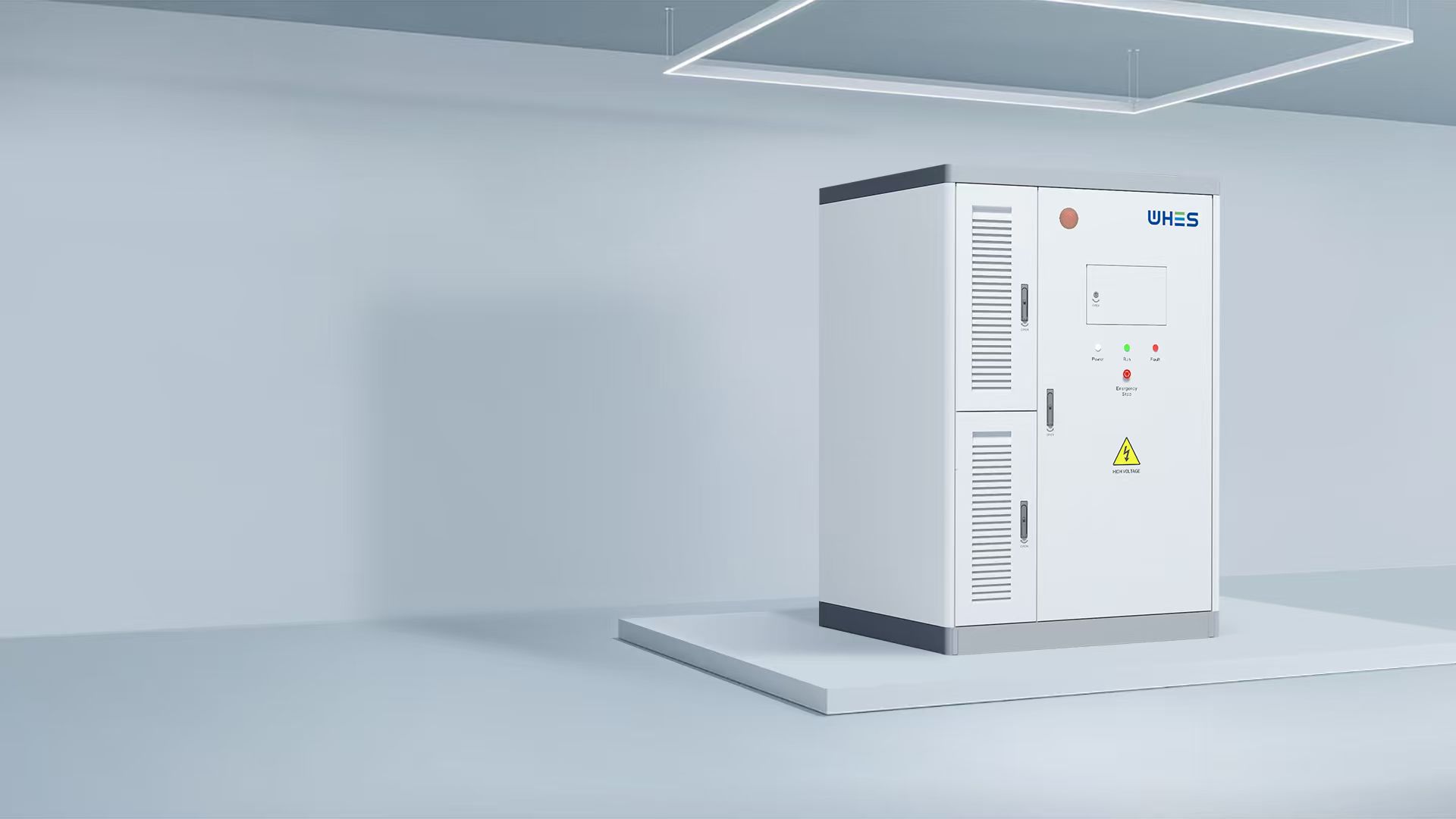
For integrated, field-oriented solutions that reflect the confluence of chemistry, thermal engineering and control logic, consider how established providers incorporate those disciplines; for many operational programs, such integration is precisely the value delivered by WHES.