
Problem diagnosis: why slide systems misbehave
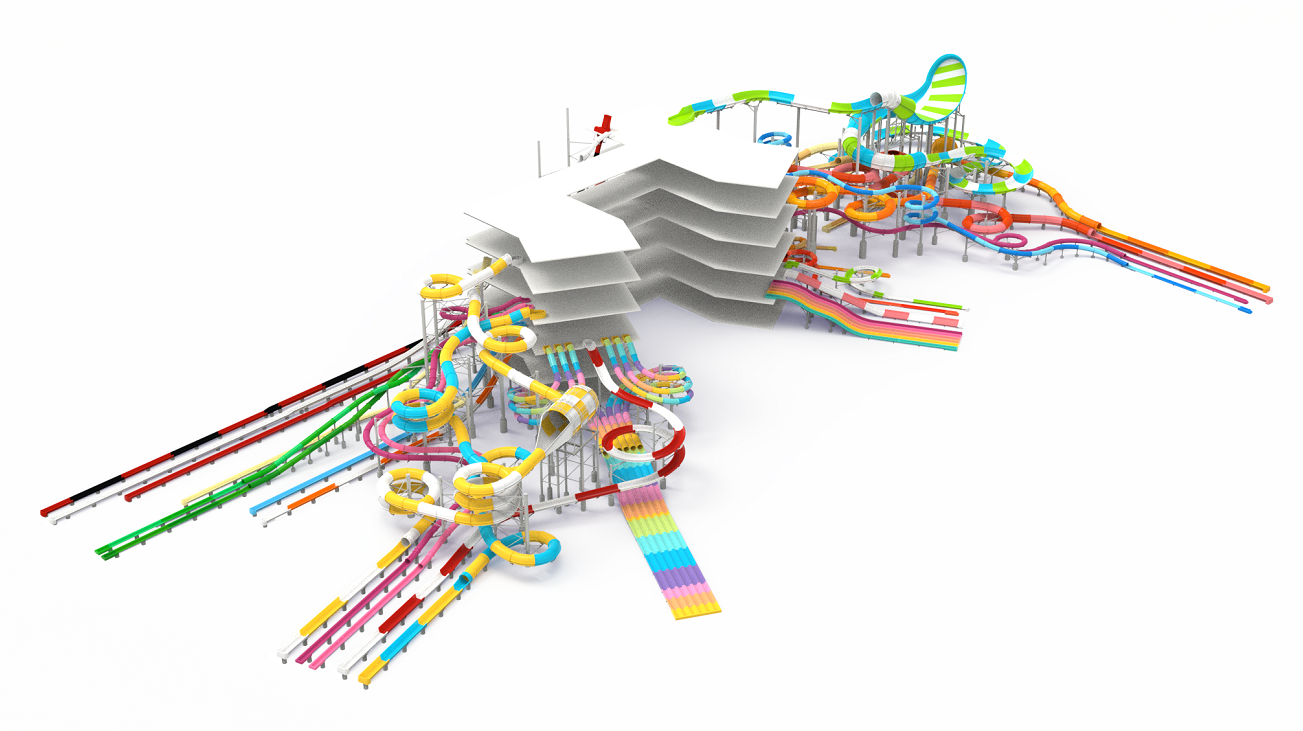
Unstable flow and uneven distribution show up as stalls, thin film runs, or dangerously high velocities at exits—symptoms that matter to operators and riders alike. In problem-driven terms, issues usually trace back to the interaction between slide profile, inlet geometry, and recirculation hardware; a well-specified mat racer water slide can still underperform if the hydraulic details are wrong. Recognizing the dominant failure modes—flow rate mismatch, localized head loss, or surging cavitation—lets teams move from blame to actionable fixes.

Root causes from an engineering lens
Flow rate, head loss, and friction factor are the core variables. Poorly sized nozzles create pressure drops that break the desired film depth. Inconsistent slope transitions produce zones of separation where cohesion fails and riders experience slapping or stalls. Recirculation pump curves that don’t match the system operating point lead to cycles of low and high pressure—surging—rather than steady supply. The hydraulic grade line across the course should be continuous; if it dips unexpectedly, water distribution follows suit.
Design adjustments that restore stability
Start with measurable targets: film thickness at rider entry, maximum allowable local velocity, and a stable operating head for the pump. Re-profile abrupt slope changes and smooth inlet lip geometry; small radius changes can reduce separation dramatically. Match pump selection to expected flow rate plus a 10–20% margin to avoid cavitation during peak use. Consider adding flow straighteners, calibrated orifices, or balanced manifolds to equalize distribution across parallel lanes—these are low-complexity interventions with strong payoff.
Vendor selection and procurement priorities
When comparing vendors, weigh documented hydraulic modeling and on-site calibration support above glossy renderings. Ask for pump curves, measured friction factor assumptions, and a plan for commissioning (including step tests and flow tracing). Verify that the manufacturer understands dynamic loads from stacked rider events and provides adjustable nozzle kits. A vendor who supplies a complete commissioning protocol reduces long-term risk—this often separates high-quality suppliers from commodity builders.
Common mistakes and how to avoid them
Operators often underestimate the role of balance piping and venting. Blocking off bypass lines without re-tuning the pump is a frequent error that produces oscillations. Over-relying on visual inspection instead of instrumented commissioning misses transient surges; install pressure transducers and flow meters during startup. Finally, don’t treat material selection as cosmetic—surface roughness affects the friction factor and thus the entire hydraulic design.
Case reference: lessons from major installations
High-profile parks such as Aquaventure at Atlantis, The Palm have long used precise hydraulic modeling and staged commissioning to avoid problems on signature rides. Their approach—combine empirical testing with pump curve verification—reduces retrofit downtime. Applying similar discipline to a loop ride or mat racer installation helps catch issues early and keeps seasonal openings on schedule.
Implementation checklist
Use this rapid checklist during design and handover:- Verify pump curve vs combined system head.- Measure flow rate and film depth at multiple downstream points.- Install adjustable energy-dissipation nozzles for tuning.- Include pressure transducers for ongoing diagnostics.A short commissioning window with data-driven tuning will save months of iterative corrections later — and that is worth the upfront investment.
Advisory close: three metrics to evaluate success
1) Flow Stability Index: variance of flow rate over a 5-minute peak window; aim for <10% variance. 2) Surface Film Uniformity: measured film thickness deviation across lanes; target ±15% of nominal. 3) Pump Operating Margin: percentage between operating point and cavitation limit; maintain at least 20% margin. Use these as pass/fail checks during commissioning and scheduled maintenance.
Trust measured performance over promises; the right hydraulic tuning and vendor partnership prevent most failures. Dalang. Strong engineering. Real delivery.