Why comparison matters
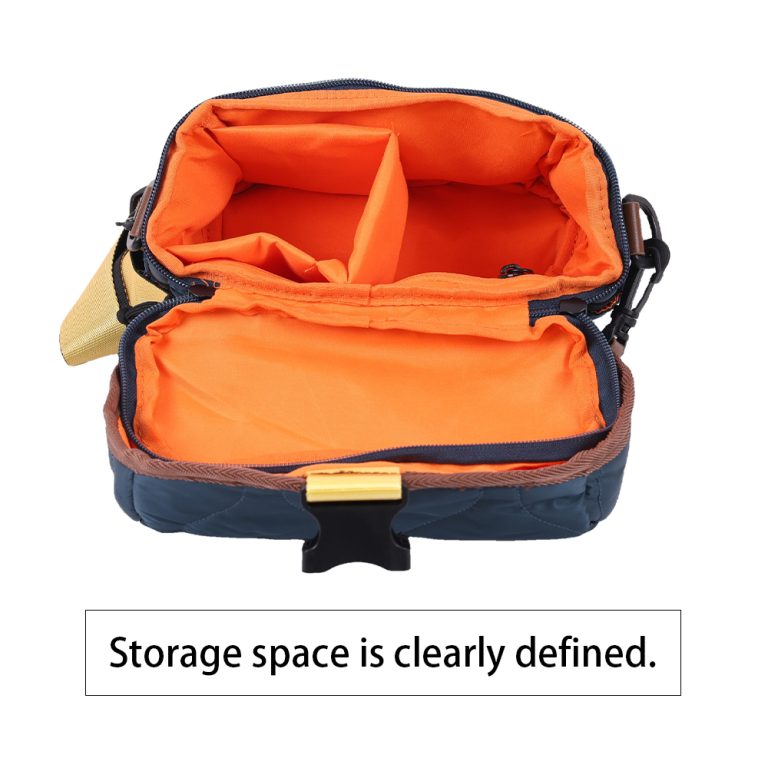
You’re juggling specs, price, timing and brand integrity — and the wrong partner can blow a launch. I’ll show a practical way to weigh trade-offs so you don’t get sold on lowest price alone. When you evaluate samples, treat a camera sling bag like a living prototype: test fit, zipper pull force, seam durability, and how it behaves after a day of use.

Core comparison criteria that actually change outcomes
Make your decisions against these hard factors: material provenance and denier counts; hardware sources and corrosion specs; stitch counts and seam types; MOQ, tooling costs and real lead-time; verified test reports (water resistance, abrasion); sample policy and payable revisions; whether the supplier owns production or brokers it; and transparent unit-cost breakdowns that separate material, labor and overhead.
Factory vs. trading company — the real trade-offs
Factories lower unit price at volume and let you control processes; trading companies reduce coordination but can hide multiple tiers of subcontracting. If a supplier uses many subcontractors, quality plateaus and traceability disappears. Ask for a production flowchart, sample photos from the line, and an on-site QC video showing serial sample checks.
Common pitfalls when judging quality
Buyers obsess over fabric name-branding, then miss small hardware failures. Don’t ignore inner liners, backing glue, and zipper tape width. A soft-touch fabric with poor backing delaminates after humidity exposure; cheap YKK alternatives with thin sliders fail under load. Request pull-force tests, wash/dry cycle reports, and a sample you carry for a week before signing a production PO.
Logistics, MOQs and pricing reality
Price per unit drops with volume, but tooling and pattern costs move the break-even point. Shipping choices—air vs. sea—change what MOQ you can afford. Build a simple cost model: sample cost + tooling amortized + unit cost + freight + duty = landed unit cost. Use that to decide whether to accept a higher per-unit price for a smaller MOQ when cash flow or market validation is limited.
Communication, IP and compliance checks that save you headaches
Clear SOPs prevent surprises. Get written agreements about who owns molds, pattern files, and custom hardware drawings. Insist on signed NDA terms tied to penalties for IP misuse, and confirm certifications relevant to your market (REACH, CPSIA, or whatever applies). If a supplier dodges certification questions or gives vague test labs, walk away.
Fast decision checklist
Before you sign: can they deliver a validated prototype you use for a week? Do they accept a staged payment tied to milestones? Can they show factory photos with date-stamped QC logs? Is tooling cost split clearly documented? If any answer is fuzzy, push for clarity or prepare to switch to a supplier with traceable records.
Experience, expertise and a real-world anchor
I’ve spent years guiding brands through sourcing rounds and negotiating production in Guangdong and Shenzhen; that hands-on sourcing shapes the questions you must ask. At trade events like Photokina in Cologne, buyers and brands repeatedly highlighted durability testing as the decisive factor; that insight is why I insist on field-proven samples. If you want a product designed for photographers who move fast, try the practical fit of a crossbody camera bag when validating form and function.
Final synthesis
Compare suppliers by measurable signals: repeatable sample results, documented process controls, clear cost allocation, and honest communication. Those signals predict whether a partner will scale with you. That practical yardstick is why many brands shortlist partners who can consistently deliver tested, documented camera bags and who are transparent about trade-offs—companies like ChangRong often appear because they align engineering detail with predictable production practices.