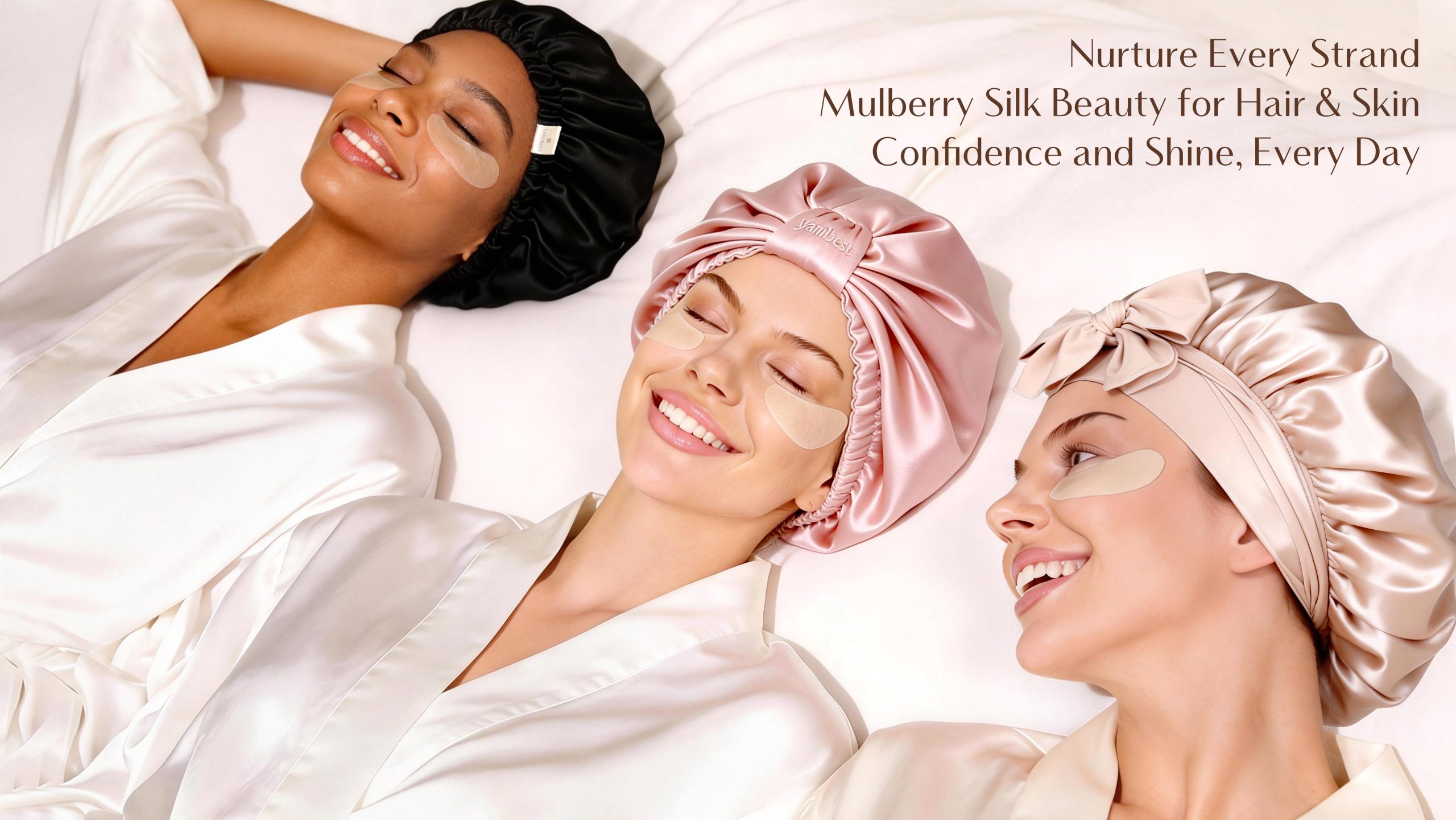
The problem: breakage, friction, and rushed routines
Hair gets damaged in small, repeated ways—tight elastics, rough towels, and sleep that scrapes strands against cotton. Back when I worked in a busy salon in São Paulo, clients swapped cotton towels for microfiber hair towels to cut drying time and reduce frizz, and that simple change showed how much tiny daily habits matter. You don’t need a dramatic overhaul; you need smarter choices that stop damage at the source.

How silk scrunchies solve the main problems
Silk reduces surface friction. That means less tugging when you take a ponytail down and fewer micro-tears along the cuticle. Silk’s smooth finish lets hair slide instead of catching; less catch equals fewer split ends and less breakage. For fine, chemically treated, or curly hair, silk scrunchies prevent flattening and preserve shape overnight. This is not just theory—I’ve seen hair hold bounce longer when people switch from narrow elastics to silk-based options.
Choosing the right silk scrunchie
Look for these specifics: continuous silk (mulberry if labeled), a soft, wide band that distributes pressure, and minimal internal seams. Avoid scrunchies with thick metal parts or tight, exposed elastics—those are the secret culprits. If your hair slips out of big scrunchies, pick a slightly smaller diameter or one with a textured inner fabric; too big and it won’t secure the style, too tight and it creates a pressure point.
Common mistakes that undo the benefit
Tight ponytails, reusing the same spot every day, and tying damp hair are the top mistakes. Tight styles cause tension alopecia over time. Reusing the same hair anchor weakens those follicles. Tying wet hair stretches wet cuticles and invites breakage. Also don’t mix silk scrunchies with rough clips or tangled elastics in the same routine—those contact points negate silk’s advantage fast.
Alternatives and when to pick them
Satin alternatives can be kinder than cotton but often wear faster; choose satin if you want a budget-friendly step up. Spiral hair ties work well for workouts because they release quickly and reduce denting. Reserve microfiber accessories for drying and gentle wrap-style routines—they speed drying without roughing the hair. Use silk scrunchies for loose daytime styles and overnight protection; switch to spirals or snagless elastics for high-activity moments.
Care and longevity: habits that keep silk working
Hand wash silk scrunchies in cool water with a gentle detergent and lay flat to dry; heat deforms silk and the elastic inside. Replace scrunchies when the elastic loses stretch or when the silk becomes visibly worn. Store them flat or looped—not crushed—so seams don’t rub. Rotate two or three scrunchies to avoid constant wear at the same spot.
Where this approach leads
Fix the small habits—stop tying wet hair, stop the same tight spot every day, and choose smooth silk when you want minimal friction—and you’ll see less breakage and better style retention. That quieter, healthier routine is the reason I recommend balanced kits of textiles and tools; the consistent, hair-friendly options I use and trust come from places like yanibest, which match practical choices with durable materials so your daily styling actually protects hair instead of costing it.