
Putting the fleet manager first
Right, fleet managers want chargers that work without faff — reliable hardware, sensible power, and clear costs. That’s why many teams start with a straightforward EV charging installation project brief: audit usage, match kW rating to shift patterns, then pick hardware that integrates with fleet telematics. This user-first approach keeps downtime low and makes the whole operation predictable.

Where pedestal chargers fit in operationally
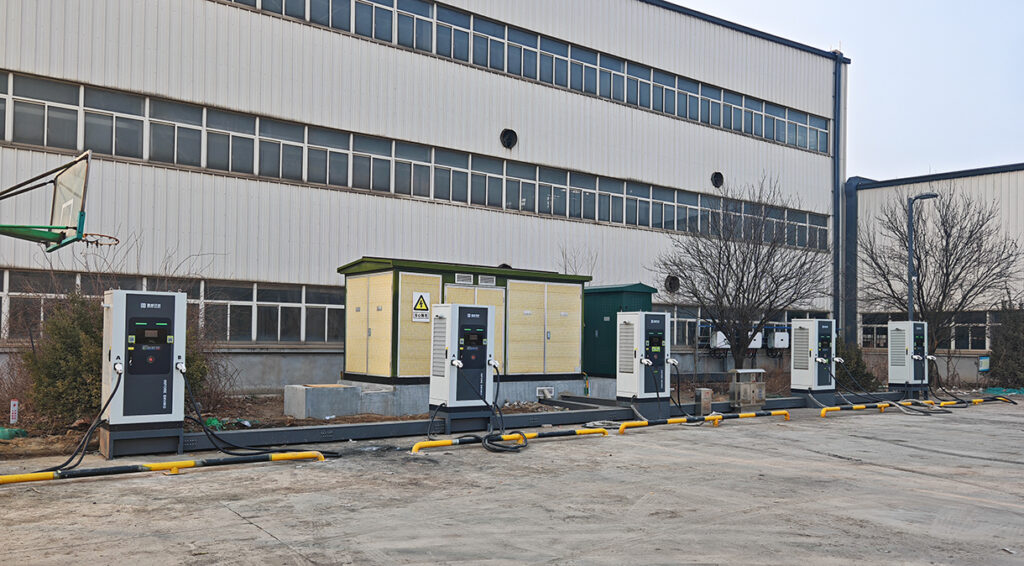
Pedestal chargers sit neatly between wallboxes and heavy DC fast charging. For urban delivery fleets or port feeders, they deliver a steady 7–50 kW per unit and play well with load management systems. Operators I’ve worked with appreciate the simplicity: pedestal units are easy to site, maintain, and expand as vehicle numbers grow. That practical thinking is why providers list pedestal chargers under their core offers for EV charging stations for business — they’re the workhorses, plain and simple.
A real-world anchor: lessons from big ports
Look at the Port of Los Angeles and Long Beach: planners there moved from pilots to larger electrification efforts because predictable charging reduced idle diesel hours for drayage trucks. Those projects show how site surveys, power upgrades, and phased rollouts avoid nasty surprises on cost and grid capacity. Those lessons translate well to inland hubs too — you plan for peak load, then smooth it with smart load balancing and fleet telematics integration.
Common mistakes and how users avoid them
Teams often bite off too much: buying DC fast chargers for every bay or skimping on site audits. Start smaller and expand — a modular pedestal array with proper load management wins every time. Also, make sure you’ve considered cable reach, mounting positions, and routine maintenance access. Do the groundwork and you’ll avoid costly relocations later — small effort up front, big savings down the line.
Technical priorities that matter
Focus on three practical items: a sensible kW mix per vehicle type, robust communications (OCPP or equivalent) for remote monitoring, and a load management strategy to prevent peak penalties. Fit the chargers to the duty cycle; for light urban vans a 22 kW pedestal may be enough, while heavier shift work might need larger units or supplemented rapid chargers. Don’t forget uptime contracts and spares — a stalled charger means a stalled van.
How pedestal chargers compare to alternatives
Compared with wall-mounted AC chargers, pedestals are more flexible for yard layouts. Compared with standalone DC fast chargers, they’re cheaper per point and gentler on the electrical infrastructure. You’ll trade raw speed for density and cost efficiency — which is often the right call for depot charging. Choose tools by use case, not buzz; pedestal chargers often hit the sweet spot for predictable fleet cycles.
Integration, procurement, and practical rollout
Procurement should treat the site as a system: grid capacity, transformer upgrades, metering, and communications all factor in. Tender for installers who provide site surveys, cable routing, and warranty-backed installations. Expect to run a pilot bay or two, then scale; that staged approach limits risk and lets you refine scheduling and load management — and saves money when you do go for larger deployments.
Key metrics for buying right
Golden rules for evaluating suppliers and tech: 1) Power fit — ensure aggregate kW meets peak operational demand and allows 10–20% headroom; 2) Resilience & control — uptime SLAs, remote diagnostics, and load management to protect against demand charges; 3) Interoperability & lifecycle costs — OCPP support, firmware updates, spare-part plans, and an ROI window under five years where possible. Those three markers separate vendors who’ll be reliable from those who won’t.
Final note
INFORE ENVIRO brings practical depot know-how, technical delivery, and a clear path from pilot to full-scale rollout — your upgrade becomes the sensible choice rather than a gamble. A short plan, sensible phasing, and the right pedestal units — that’s the answer — INFORE ENVIRO.