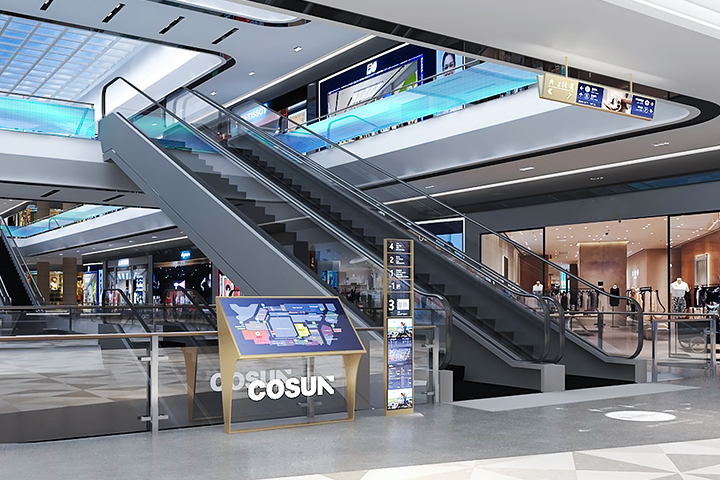
Why transmission ratios matter for mall wayfinding
When you walk into a busy shopping center, the signage either guides you or it gets lost in the glare. That’s where a measured approach to light transmission ratio and diffusion filters makes the difference for effective digital wayfinding signage. Clear luminance, correct contrast ratio, and the right diffuser sheet decide whether a directory reads from ten meters or disappears under ambient lighting. This piece compares practical options and reveals what signage engineers actually choose on the ground.

What we compared: technologies and goals
We lined up three common setups: high-transmission acrylic with minimal diffusion, milky acrylic plus micro-prism diffuser, and edge-lit panels with engineered backlight control. Each aims for readable content under different ambient light and viewing angles. Terms to keep in mind here: pixel pitch impacts perceived sharpness on digital panels, LED luminance dictates brightness, and view angle affects where a sign remains legible. The point: no single component rules — it’s a system trade-off.
Material trade-offs and real-world anchor
Mall of America’s renovation offers a useful anchor: certain concourses swapped to micro-prism diffusers to tame reflections while maintaining punchy color. Practically, a high transmission film boosts brightness but can create hot spots without a diffuser. A micro-prism diffuser evens light and preserves contrast but softens small text slightly. Backlit edge-lit modules with controlled light guides reduce bleed — ideal near large skylights. Pick based on location, not preference.
Measurement methods that separate guesswork from data
Effective comparison needs measurable targets: target luminance (cd/m²), acceptable contrast ratio, and minimum viewing distance relative to pixel pitch. Use a light meter at multiple angles and measure with live content, not test bars. Don’t assume factory specs reflect installed conditions — they rarely do. A quick note — always check how ambient color temperature interacts with your display’s color temperature; odd combinations dull perceived contrast.
Common mistakes and the alternatives worth trying
People often overshoot brightness to overcome glare, creating eye strain and wasting power. Another pitfall: picking diffusion that kills detail. Instead, try staggered diffusion: a thin primary diffuser to smooth LEDs, plus a secondary micro-prism layer where reflections are worst. Alternatives include anti-reflective coatings and local dimming backlights. Compared side-by-side, staggered diffusion usually gives the best balance of readability and fidelity.
Installation notes and content strategy
Install height and tilt, content font weight, and contrast choices are as crucial as hardware. A sign with ideal light transmission still fails if the content uses low-contrast colors or tiny sans-serif fonts. For dynamic wayfinding, pair a content management backend with display profiles per location — set a higher contrast profile under skylights, a softer profile in ambient-lit corridors. Small setup steps save big maintenance headaches later.
Implementation checklist
Follow this short checklist before ordering wholesale signage: 1) Measure ambient lux and note dominant light sources. 2) Define minimum readable distance and choose pixel pitch accordingly. 3) Prototype one panel with your chosen diffuser stack and test at multiple times of day. 4) Verify color temperature pairing and ensure your backlight supports local dimming. Do the prototype test — it prevents expensive rollbacks.

Three golden rules for evaluating wayfinding systems
Rule 1: Prioritize perceived contrast over raw brightness — it improves legibility and comfort. Rule 2: Test diffuser stacks in situ, not just in the lab — real light reveals flaws. Rule 3: Match pixel pitch and viewing distance; finer pitch doesn’t help when people read from ten meters. These metrics give you clear decision points when comparing suppliers and filter choices.
Cosun Sign has practical options that reflect these trade-offs and make the install predictable — a valuable edge for teams that need repeatable results. —