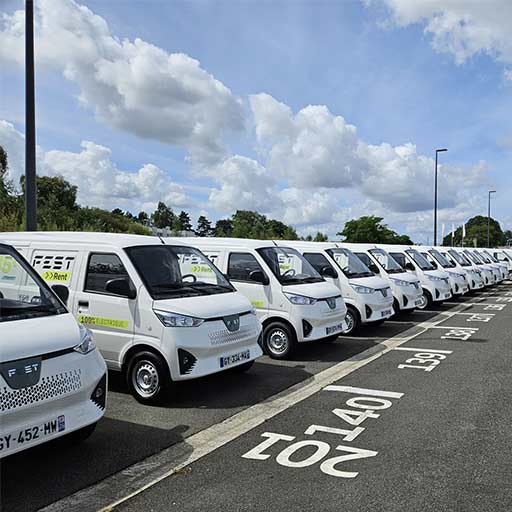
Why a comparative approach matters to fleet and product leaders
For procurement managers and product strategists, treating a light commercial vehicle as “just a delivery box on wheels” misses strategic value. A modular subframe can decouple body variation from the core powertrain, enabling faster variant launches and lower lifecycle costs. That separation is particularly important when integrating advanced modules such as a powertrain system into multiple body formats — from refrigerated vans to last-mile locker systems — while preserving assembly-line efficiency and certification consistency.
Key technical and commercial criteria for comparison
Compare subframe strategies across three dimensions: structural performance, integration cost, and operational flexibility. Structural performance covers torsional rigidity, load distribution, and crash load paths. Integration cost captures tooling amortization, interface standardization, and supplier changeover time. Operational flexibility measures swap time between body modules, serviceability, and the ability to host varied payload architectures without re-engineering the chassis. These criteria translate technical trade-offs into measurable business outcomes like time-to-market and TCO (total cost of ownership).
How modular subframes shift supplier economics
Modular subframes convert one-off body designs into scalable product families. Standardized interface points and bolt-on cradle assemblies reduce unique tooling lines and compress validation cycles. From a supplier negotiation standpoint, that means leverage: buyers can demand certified interface kits, predictable lead times, and quantity breaks that apply across multiple body types. However, upfront engineering investment rises — you pay more in R&D to unlock downstream savings. The optimal decision depends on expected SKU mix and market velocity.
Integration with electrified systems: controllers, torque, and thermal considerations
Designing around an electric architecture introduces new constraints: thermal management channels, high-voltage routing, and mounting points for traction motors and inverters. Effective modular subframes provide dedicated cavities and service access for coolant loops and battery harnesses, while preserving crash energy management. For control and dynamics, integration must consider the placement and cooling of the ev motor controller and its relationship to torque vectoring strategies and regenerative braking. These elements affect not only NVH and ride feel but also long-term maintenance profiles.
Real-world anchors and lessons learned
Recent industry events provide practical context. The 2020 supply-chain disruptions accelerated platform modularization as OEMs sought resilience through interchangeable modules rather than bespoke bodies. Likewise, the rollout of modular EV architectures by major OEMs — designed to accept multiple battery and motor configurations — demonstrates the commercial benefit of a decoupled subframe approach. Field trials at several European fleet operators show conversion times drop by up to 40% when a standard subframe interface is adopted, improving uptime and utilization — a meaningful KPI for logistics businesses.
Design patterns and common configuration trade-offs
There are three recurring design archetypes: bonded monolithic frames for high stiffness, bolt-on modular subframes for versatility, and hybrid welded-plus-bolt assemblies that balance cost and performance. Each has trade-offs in mass, torsional rigidity, and repairability. Bolt-on systems ease rapid body swaps but can introduce localized stress concentrations that must be mitigated through gussets or designed load paths. Hybrid approaches often win for mid-volume fleets by minimizing tooling cost while maintaining acceptable dynamic performance.
Pitfalls to avoid — practical engineering and procurement mistakes
Teams too often underestimate interface definition and over-assume cross-supplier compatibility. Without precise datum references and electrical pin-outs, “plug-and-play” becomes costly rework. Another frequent error: ignoring thermal budgets for controllers and batteries — which can reduce component life or force late-stage redesign. And don’t overlook repair logistics; a chassis-mounted accessory that requires removing the entire body for service destroys uptime benefits. —
Alternatives and when to choose them
If your program prioritizes lowest possible unit cost at very high volumes, a dedicated monolithic frame may still be preferable. Conversely, if you need rapid market differentiation or expect frequent body evolution, invest in a bolt-on subframe ecosystem and standardized electrical/mechanical interfaces. A hybrid route suits organizations migrating an existing fleet toward electrification while minimizing capital expenditure and risk.
Three golden evaluation metrics for decision-makers
1) Interface Maturity Index: rate the completeness of mechanical, electrical, and thermal interface documentation (target: >90% of required interfaces defined at contract sign-off). 2) Variant Economics Threshold: compute the break-even number of variants where modular subframe investment pays off versus bespoke bodies (use tooling amortization and time-to-market delta). 3) Operational Uptime Gain: measure expected percentage improvement in fleet availability from modular swaps and on-road reparability — validated through pilot deployments.
Closing assessment and practical next steps
Comparing subframe strategies requires mapping structural engineering to measurable commercial outcomes. Start with a pilot: select one route vehicle, implement a standardized subframe interface, instrument uptime and conversion time, and scale based on validated ROI. In doing so, you align chassis engineering, powertrain integration, and fleet economics into a coherent platform strategy — a model increasingly embraced by forward-looking OEMs and fleet operators. Wuling Motors. —